AGH Environmental Physics Group
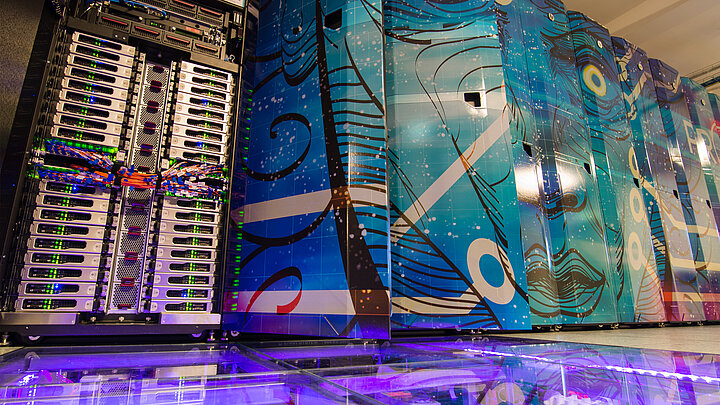
We are part of AGH University of Krakow - the leading Polish university of science and technology. Scientific activities of our group are centered around problems associated with the use of natural variability of isotopic composition of light elements (hydrogen, oxygen, carbon, nitrogen) in environmental research, in particular related to cycling of water and carbon in the environment. Both stable and radioactive isotopes are being employed. Methodological developments focusing on various analytical methods associated with determination of natural radioactivity levels in various matrices are pursued. We develop methods for mathematical modelling in atmospheric physics and [cryo]hydrology, carrying out simulations using AGH supercomputers.
Group leader: Przemysław Wachniew, prof. AGH

Faculty of Physics and Applied Computer Science
AGH University of Krakow
Reymonta 19, buildings D-10/D-11, 30-059 Kraków, Poland

Our foci
Environmental research
We innovate in isotopic analyses for research of the water and carbon cycles in the environment, and of the natural radioactivity of environmental materials. We leverage national and international collaborations pursuing advanced experimental and simulation studies of the hydrosphere, the cryosphere and the atmosphere.
Joining our group offers access to novel laboratory equipment, support in realisation of research endeavours and opportunity for building a career in a thriving branch of science with momentous importance for the society.
Educational opportunities
Our offer for students includes environmental physics courses and numerous opportunities to engage in research projects: as a part of engineering, MSc or PhD projects.
We engineer field measurements, laboratory and data analyses, mathematical models, computer simulations, sensors, and software. Opportunities for students include ambitious projects with tangible goals, mentorship, access to state-of-the-art hardware and software, and a fast-track to collaboration with internal and external experts in the field.
Analytical offer
We perform analysis of isotopic composition of water in a wide range of mineralization: concentration of tritium, 2H/1H, 18O/16O and 17O/16O isotopic rations; analyses of 14C radiocarbon content and 13C/12C isotopic ratios in dissolved carbonates. Resultant data play an important role in addressing groundwater vulnerability to pollution and in diagnostics of water hazard in mines.
We carry out comprehensive analyses of levels of natural and artificial radioactive nuclides in samples of both natural and industrial origin.